

Mindful solo intimacy gives you a slower, kinder way to connect with your body when stress, shame, or habit has made solo touch feel rushed or disconnected. Instead of chasing a fast result, mindful solo intimacy asks you to notice breath, tension, comfort, and emotion so the experience feels more grounded, private, and genuinely supportive.
That shift matters because many adults are not struggling with desire itself so much as they are struggling with pressure. Planned Parenthood notes that masturbation is normal and can be a healthy way to learn about your body, while guidance from Royal Berkshire NHS Foundation Trust recommends full attention, realistic time limits, and a goalless mindset during self-touch practice.
Key Takeaways
- A comfort-first solo routine works best when the goal is awareness, not performance.
- Body scans, slower pacing, and self-compassion can make solo exploration feel safer and more informative.
- Short rituals, privacy, and clear stop signals help keep the practice grounded and discreet.
What mindful solo intimacy means
At its core, mindful solo intimacy is a body-awareness practice. It treats solo pleasure as a chance to notice sensation, emotion, and comfort with more patience, rather than as a task to finish as quickly as possible. That can mean slowing down, adjusting the environment, or simply noticing when your body feels open versus when it feels tense or distracted.
This framing is helpful because it removes the idea that you need to perform, prove something, or follow a script. If you have been curious about lower-pressure connection in general, our guide to soft life intimacy applies the same principle of calm, gentler pacing to partnered closeness too.

How it differs from autopilot habits
Autopilot habits are usually built around efficiency. You might tune out, rush, grip too hard, or stay so focused on the ending that you miss what the body is actually telling you. A mindful approach changes the question from “How fast can I get there?” to “What feels supportive, comfortable, and true right now?”
What makes a solo practice mindful
The mindful part is not about perfection. It is about paying attention without harsh judgment. Cleveland Clinic explains that mindfulness and self-compassion help you stay present with yourself and respond with more kindness, which is especially useful if body criticism or embarrassment tends to show up during private moments.
Why mindful solo intimacy can help
Mindful solo intimacy can help because the body usually responds better to safety than to pressure. According to Cleveland Clinic’s body scan guidance, non-judgmental awareness can improve grounding, help the nervous system relax, and strengthen the mind-body connection. That same skill can make solo exploration feel calmer and less disconnected.
It can also reduce shame. Cleveland Clinic’s self-compassion guidance describes mindfulness, self-kindness, and common humanity as key ways to soften the inner critic. If you tend to think you are doing everything wrong, that shift alone can change the experience from tense to informative.
Body awareness improves feedback
When you are actually present, you can tell the difference between numbness, stress, curiosity, comfort, irritation, and genuine pleasure. That makes it easier to adjust your pace, position, pressure, or products. It is a similar awareness skill to the one we discussed in our sensory intimacy guide, just turned inward for solo self-connection.
Presence lowers the pressure to force a result
Mindful’s body scan practice emphasizes noticing what is there without trying to fix it on the spot. That matters here. If you approach the moment as data instead of a pass-fail test, you are less likely to spiral when your body needs more time, more softness, or no continuation at all that day.
How to practice mindful solo intimacy safely
Mindful solo intimacy works best when you make the setup easy. You do not need an elaborate routine, expensive tools, or a perfect mood. You need enough privacy to relax, enough time to avoid rushing, and a clear reminder that stopping early is still a successful practice.
1. Set up for privacy and comfort
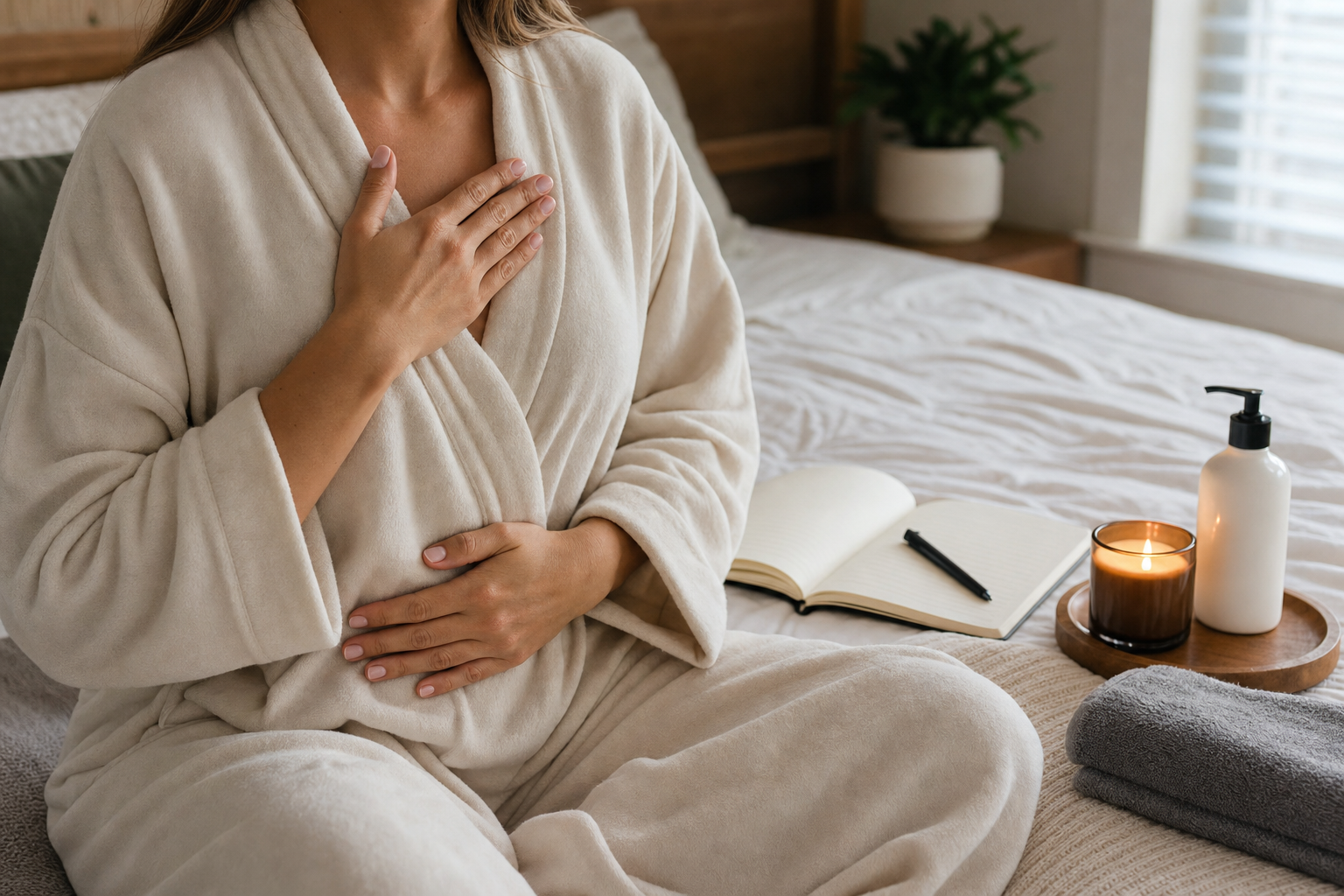
Choose a time when you are less likely to be interrupted. Dim the light, put your phone away, and make the room feel supportive rather than dramatic. A clean towel, water, unscented lotion, and comfortable temperature are usually more useful than anything flashy. If routines help you stay consistent, our piece on intentional intimacy shows how structure can protect connection without making it feel rigid.
2. Pick one anchor for attention
Use one simple anchor so your mind has somewhere to return. Breath is the easiest option. You can also focus on the feeling of your feet on the bed, the warmth of your hands, or the contact between your back and a pillow. The Royal Berkshire NHS leaflet suggests realistic timing and a goalless attitude, which makes a five-minute practice perfectly valid for beginners.
3. Keep the pace low enough to notice change
Slower is not always better, but slower usually gives you better information. Notice whether your breathing shortens, your shoulders tense, or your thoughts start racing. If you feel yourself rushing automatically, pause and take two deeper breaths. That small reset often brings the practice back into the body instead of leaving it stuck in the head.
4. Stop when discomfort starts to grow
Discomfort can be physical or emotional. Friction, dryness, numbness, shame, or sudden sadness are all valid reasons to pause. Planned Parenthood notes that irritation can happen with rough technique or products that do not agree with your body, so use gentle pressure and switch products if something feels off.
A gentle solo intimacy routine
You can use this short routine once or twice a week, or anytime you want a calmer reset. The point is not to perform it perfectly. The point is to practice noticing what helps you feel more at home in your body.
Step 1: Arrive with a one-minute body scan
Before touching anything intimate, scan from your jaw to your shoulders, belly, hips, and legs. Ask yourself where you feel tight, numb, warm, restless, or calm. Cleveland Clinic describes body scans as a way to reconnect to the body in a judgment-free way, and that is exactly the energy you want to bring into the rest of the practice.
Step 2: Explore pace, pressure, and sensation
Move slowly enough to notice contrasts. One style of touch might feel grounding while another feels irritating or emotionally flat. This is where the routine becomes useful data collection. You are learning what pace, pressure, texture, or environment helps you stay present, not just what gets the fastest reaction.
Step 3: Check in before deciding what comes next
Halfway through, pause for a breath and ask, “Do I want to continue, change something, or stop here?” That question builds consent with yourself. It also helps prevent old patterns where you keep going even after your body has stopped feeling engaged.
Step 4: Reflect for one minute afterward
Afterward, note one thing that felt calming, one thing that felt neutral, and one thing you would change next time. Over time, these notes make the practice more specific and more supportive. You may discover that certain times of day, certain moods, or certain sensory details consistently help you stay connected.
When this practice is not enough
Mindful solo intimacy can be a helpful self-care tool, but it is not meant to override pain, trauma, or ongoing distress. If private touch regularly brings up panic, dissociation, intrusive thoughts, or physical discomfort, a solo routine may need to give way to professional support. The same is true if you notice persistent dryness, pain, numbness, or changes that feel medically concerning.
That does not mean something is wrong with you. It means your body may be asking for a different kind of care. A trauma-informed therapist, pelvic health clinician, or sexual health professional can help you sort out what belongs to stress, what belongs to technique, and what deserves medical attention.

Signs to slow down and reset
If you feel detached, emotionally flooded, or physically irritated, count that as useful information. Return to breath, sit up, drink water, and end the session if needed. A shorter, kinder practice is more valuable than pushing through and reinforcing stress.
When professional support makes sense
Reach out for support if shame feels overwhelming, if your body often shuts down, or if solo touch is tied to pain or memories you do not feel equipped to hold alone. Getting help is not a failure of the practice. It is a sign that you are listening well.
Mindful solo intimacy FAQ
Is mindful solo intimacy the same as masturbation?
Not exactly. Masturbation describes the behavior, while mindful solo intimacy describes the mindset. It focuses on presence, comfort, and body awareness rather than speed or performance.
How often should I try it?
Once or twice a week is enough for most beginners. Consistency matters more than intensity, and even five to ten minutes can teach you a lot if you are truly paying attention.
What if shame shows up right away?
That is common, especially if you grew up with negative messaging around pleasure or your body. Try shortening the session, staying clothed at first, or practicing only the body-scan portion until more ease returns.
Can this improve partnered intimacy too?
Often, yes. When you better understand your own pace, boundaries, and sensory preferences, it can become easier to communicate them in a relationship and ask for the kind of closeness that actually feels good.
Mindful solo intimacy is most effective when it helps you build honesty, calm, and body trust over time. If you let curiosity lead, keep the pace gentle, and treat your responses as information instead of judgment, mindful solo intimacy can become a steady part of a healthier self-connection routine.